Biophysics brings the physicist style of inquiry to the phenomena of life. Life & imaging are considered at an enormous range of scales: from single molecules to cells, organisms to populations, and biomedical applications for human health.
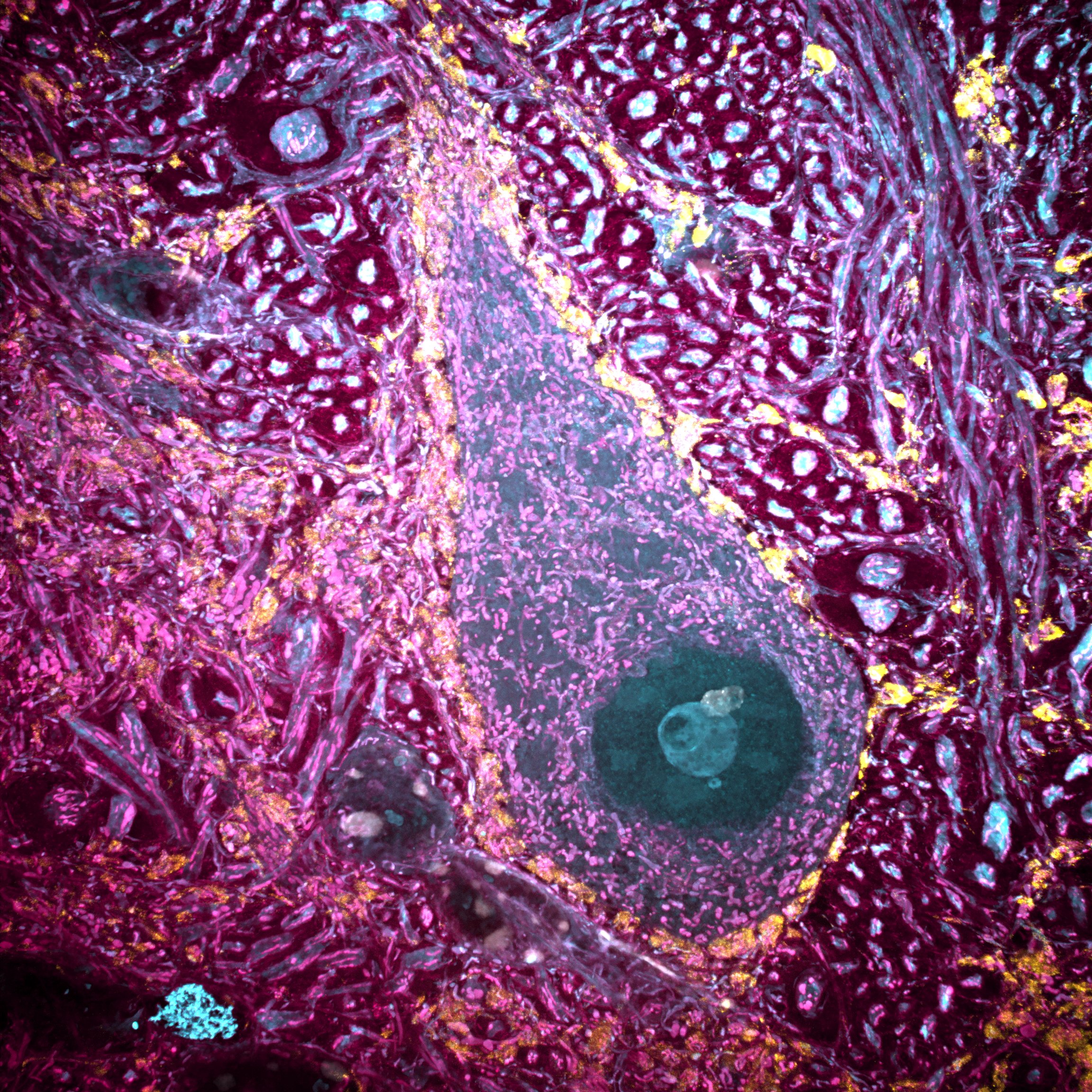

Krista Freeman studies bacterio-phages: viruses that infect bacteria. Cryo-EM structurally defines these curious entities, mapping & modeling their intricate protein structures. In parallel, experiments map the antigenicity of phages, which can provoke an immune response when administered to humans to infect & kill antibiotic-resistant bacteria. Synthetic biology approaches perform structure-guided engineering of bacteriophages to optimize them for therapeutic use (see group website for more).
 .
.
Robert Brown works in several research areas, including cancer treatment. One groundbreaking approach is CAR T-cell immunotherapy, which reprograms a patient’s own T cells to recognize and attack cancer cells. The CAPGLO physics project, in collaboration with the School of Medicine, is developing a low-cost instrument capable of efficiently capturing and detecting T cells from large volumes of blood.
Mike Martens works in magnetic resonance imaging (MRI), developing conceptual designs for MRI magnets that use magnesium diboride as a superconductor to reduce the need for liquid helium and expand worldwide access to MRI. He also studies the use of artificial intelligence in physics research and teaching.
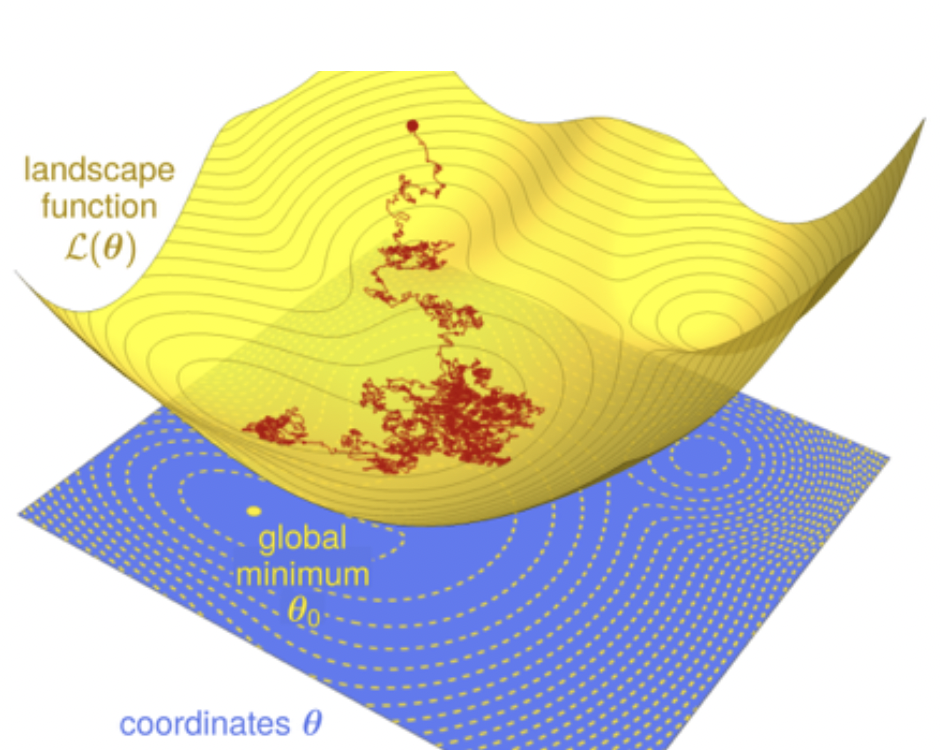
Michael Hinczewski applies concepts from statistical physics to a wide range of phenomena in living systems. A primary focus of his research is modeling evolution, from predicting and controlling drug resistance in diseases such as cancer to understanding how thermodynamics shaped the origins of cellular processes. His group is also engaged in diverse interdisciplinary collaborations, including work on optical biosensors, machine learning, and art history (see group website for more).
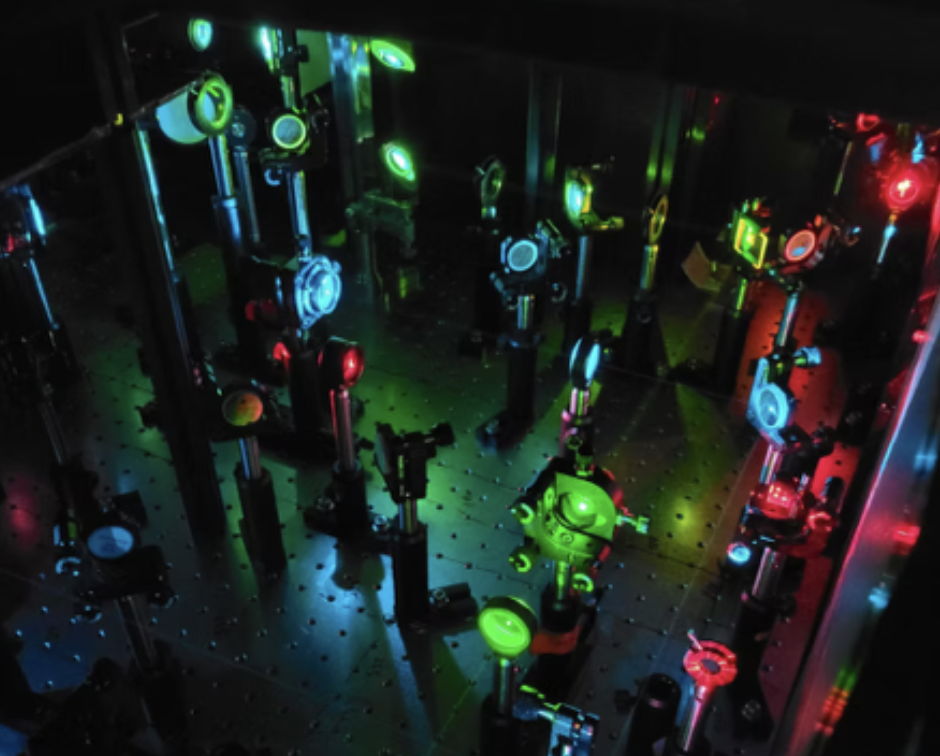
Lydia Kisley develops advanced light microscopy techniques to image materials at the ultimate concentration limit of single molecules. Her work tracks how molecules stick, move, react, or change conformation over space, time, and temperature in (bio)materials. These projects are motivated by practical challenges in industry and medicine, including the extracellular matrix and nutrients in disease, rare earth element separations, and corrosion (see group website for more).