Research focuses on uncovering the origin and evolution of the universe and understanding the fundamental forces and particles that govern it, connecting the largest and smallest scales through experimental, computational, observational, and theoretical approaches.
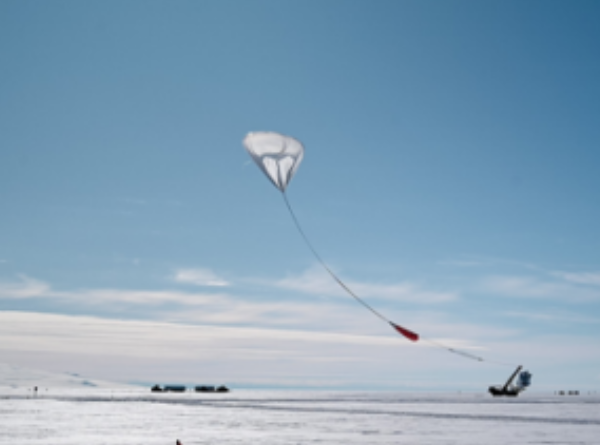
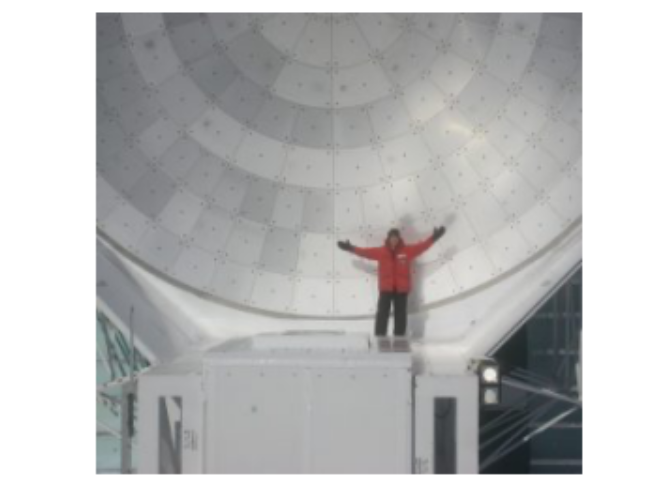
Johanna Nagy focuses on experimental cosmology, studying the evolution and composition of the Universe. Her group designs and builds balloon-borne and ground-based microwave telescopes, including SPIDER, Taurus, and SPT-3G+, and analyzes the resulting data. Precision measurements of the Cosmic Microwave Background (CMB) radiation—emitted just a few hundred thousand years after the Big Bang—are transforming our understanding of the Universe, as these photons carry imprints of the Universe’s structure, contents, and even events that occurred before their formation.
John Ruhl is an experimental physicist studying the Cosmic Microwave Background (CMB) to understand the contents and history of the Universe, as well as the fundamental physics that shapes them. His group collaborates globally to design and build new instruments, deploying them on stratospheric balloons and at the South Pole.

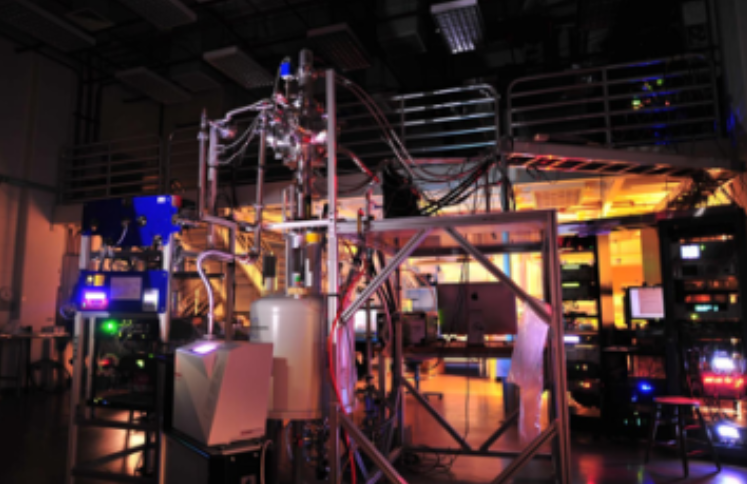
Ben Monreal is an experimental physicist studying neutrinos, dark matter, and astrophysics, with a focus on developing novel detection instruments and materials. Current projects include the Project 8 collaboration, which aims to measure the neutrino mass using a specialized radiofrequency spectrometer for atomic tritium beta decay. His group also works on neutrinoless double beta decay, supernovae, and large telescope experiments.

Corbin Covault is an experimental physicist in high-energy particle astrophysics. His group focuses on ground-based instruments for detecting the highest-energy cosmic rays, collaborating with the Auger Cosmic Ray Observatory in Argentina and the Telescope Array experiment in Utah.

Cyrus Taylor began his career in high-energy particle physics but shifted to climate research after witnessing glacial retreat on Mount Kilimanjaro. His work now focuses on climate modeling and the physics of climate change. He is a Guggenheim Fellow and a Fellow of the American Physical Society.

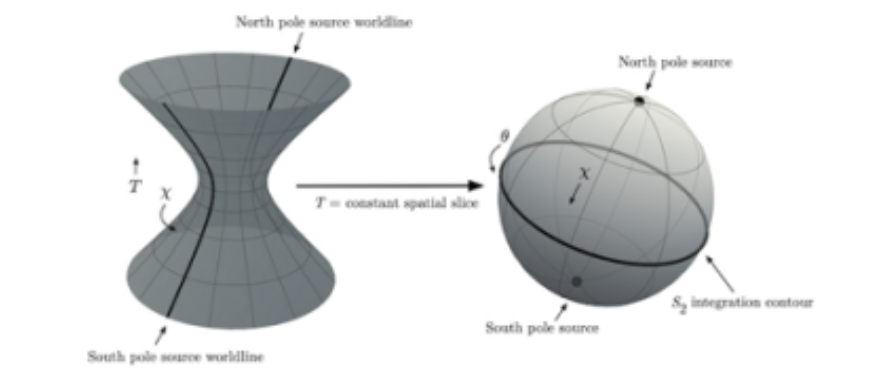
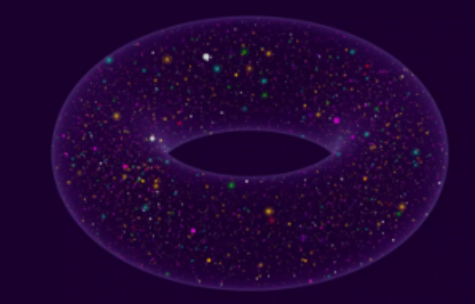
Glenn Starkman works in cosmology and gravitation, with occasional research in particle physics. His current focus includes testing whether the universe is truly isotropic, exploring cosmic topology (the idea that the universe may have closed loops, like in classic video games where exiting one side of the screen brings you back on the other), studying observational consequences of light and gravitational waves traveling at or below the speed of light in a bumpy universe, and investigating whether dark matter could be macroscopic, such as primordial black holes or large chunks of strange nuclear matter.

Idit Zehavi works at the interface of theory and observation, studying the universe through large galaxy surveys and cosmological simulations. She has been extensively involved with the Sloan Digital Sky Survey, which mapped a quarter of the sky using galaxies as tracers. Her research focuses on galaxy clustering and its implications for cosmology, galaxy formation, and the complex relationship between galaxies and dark matter halos.

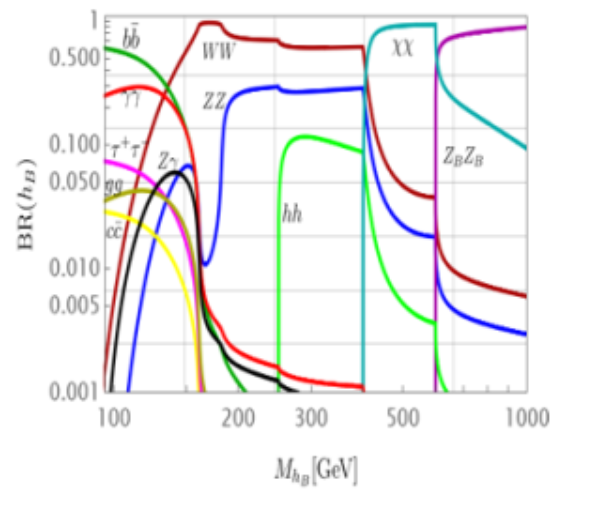
Pavel Fileviez Perez is a theoretical physicist working in particle physics and cosmology. His research focuses on new theories of neutrino masses, dark matter, and the unification of fundamental interactions. He earned his Ph.D. in Physics from the Max Planck Institute for Physics.

Kurt Hinterbichler is a theoretical physicist with broad interests, including effective field theory, early universe cosmology, higher spins, extra dimensions and brane worlds, and modified gravity. He is particularly focused on understanding the structure of effective field theories, a primary tool for tackling problems when a full underlying theory is unknown or too difficult to solve.

Harsh Mathur’s research spans theoretical condensed matter physics, cosmology, astrophysics, and interdisciplinary science. Recent and current projects include testing the law of gravity in the outer solar system, exploring new quantum states in cold atoms, and, in a more lighthearted vein, studying the statistics of doodle polls.