- About
- Academic Programs
- Application for Physics Ph.D. and M.S. degrees
- Doctoral Program
- Masters Degree in Physics
- Masters in Physics Entrepreneurship
- Master of Science in Physics, Medical Physics Track
- Medical Physics Certification for PhDs and PhD Students
- Graduate Course Descriptions
- Graduate Course Syllabi
- Physics Graduate Student Association
- Research
- Seminars & Colloquia
- News & Videos
- Local
- Support Us

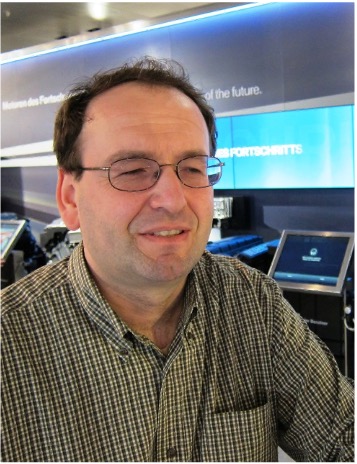
Alexander O. Govorov (Ohio University)
Date: Mon. September 21st, 2026, 12:45 pm-1:45 pmLocation: Rockefeller 221 (Foldy room)
Why Is Chirality So Hot in Plasmonics?
A Short Journey into Langmuir’s Legacy of Plasma Oscillations and How the Term “Plasmon” Was Coined
Speaker: Alexander O. Govorov
Department of Physics and Astronomy, Ohio University, Athens, USA; govorov@ohio.edu
(Host: Harsh Mathur)
Abstract: Chirality, a property of structures whose mirror images cannot be superimposed [1], plays a fundamental role in biological systems and is becoming increasingly important in plasmonics and biophotonics. We investigate how symmetry breaking and plasmonic resonances govern local electromagnetic fields and hot-carrier distributions [2].
Our approach combines electromagnetic simulations with quantum and semiclassical transport theory [3], supported by spectroscopic and photoelectrical experiments. We also briefly discuss Langmuir’s legacy of plasma oscillations and the enduring influence of the Drude–Sommerfeld model on modern nanoscale transport physics and hot-electron phenomena in plasmonic materials.
[1] W. Thomson (Lord Kelvin), The Molecular Tactics of a Crystal, Clarendon Press, Oxford (1894).
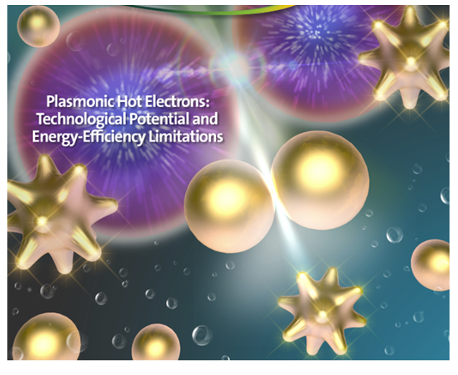
[2] Y. Yao et al., Chem (Cell Press), 102544 (2025).
[3] L. Chang et al., ACS Energy Letters 4, 2552–2568 (2019).